
The result is only one field
A profitable trade can involve a poor decision, and a losing trade can follow a clearly defined plan. A journal is more useful when it preserves the decision process as well as the outcome. CME Group includes a trader log among the components of a trading plan. The practical template below is an original way to organise that record.
CME Group: building a trade plan
Write the plan before the outcome
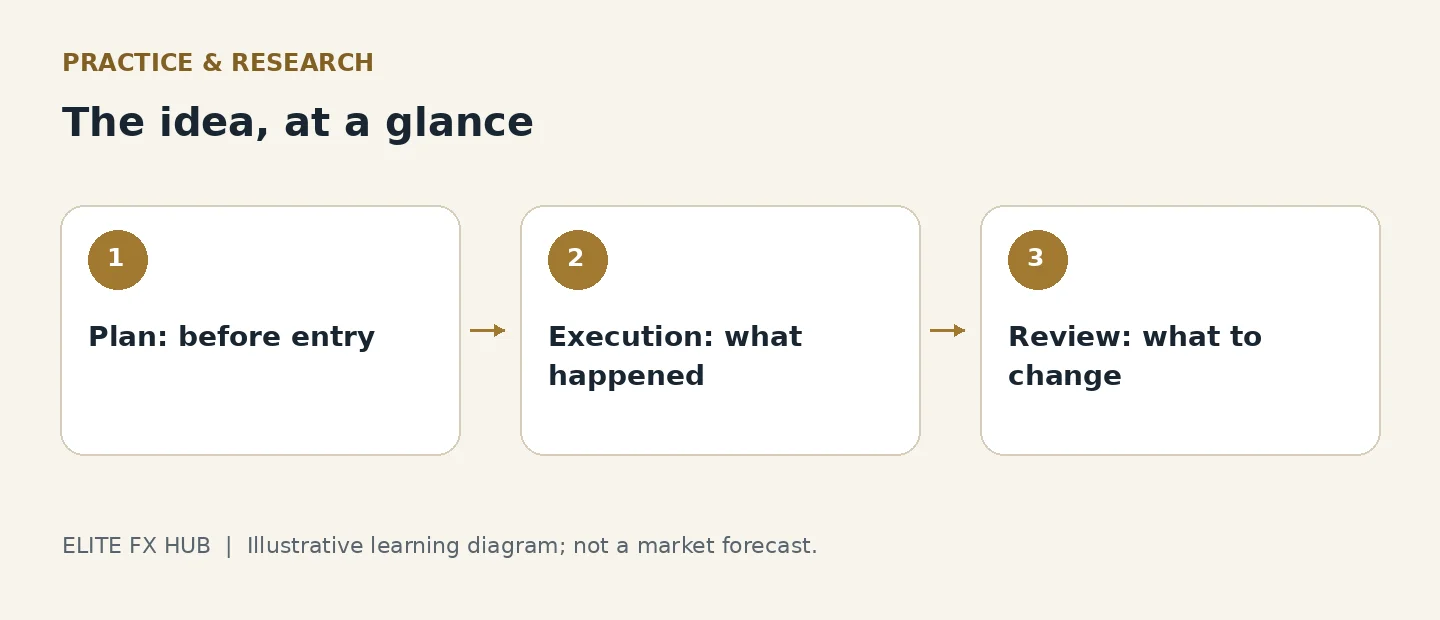
Before a demo trade, record the date, instrument, time frame, setup description, intended entry, invalidation, planned exit and risk calculation. Add a screenshot and a sentence explaining what would make you cancel the idea. Timestamp this note so that later knowledge does not quietly become part of the original reasoning.
Keep execution separate
After the decision, record the actual fills, size, fees, stop changes and exit reason. If you departed from the plan, describe the action in neutral language. For example, write that the stop was moved after price approached it, rather than describing the trade as stupid or unlucky. Specific actions can be reviewed; insults cannot.
Use a small set of consistent tags
Choose a few tags that answer real review questions: setup, session, planned versus unplanned entry, and whether an important release was nearby. Too many categories make a small sample difficult to interpret. Keep definitions written down so the same label means the same thing next week.
Run a weekly review
Read the week's entries before looking for a favourite result. Separate rule-following from financial outcome. Identify one repeated behaviour, select one change to test in the next practice period and state how you will measure it. An example is completing the sizing worksheet before every simulated order, rather than an untestable goal such as being more disciplined.
Keep conclusions proportional to the evidence
A handful of trades cannot establish that a session, pattern or indicator is reliably better. Treat small-sample patterns as questions for further observation. A journal should help you retain evidence and notice inconsistencies, not provide a story that makes every outcome seem inevitable. Review losing, winning and skipped opportunities with the same structure.
Sources and further reading
CME Group: building a trade plan
Educational material, not a recommendation to trade. Examples are hypothetical. Leveraged products can produce substantial losses. Source links provide context and do not imply an endorsement of ELITE FX HUB.