Margin is collateral
Margin is the amount required to support a leveraged position. It is not the same as the full exposure and it is not a promise that losses stop at that amount. The CFTC warns that leverage amplifies the effects of price movements in retail forex. Product rules and account protections differ across providers and jurisdictions.
CFTC: retail forex risks and fraud awareness
Work through the exposure
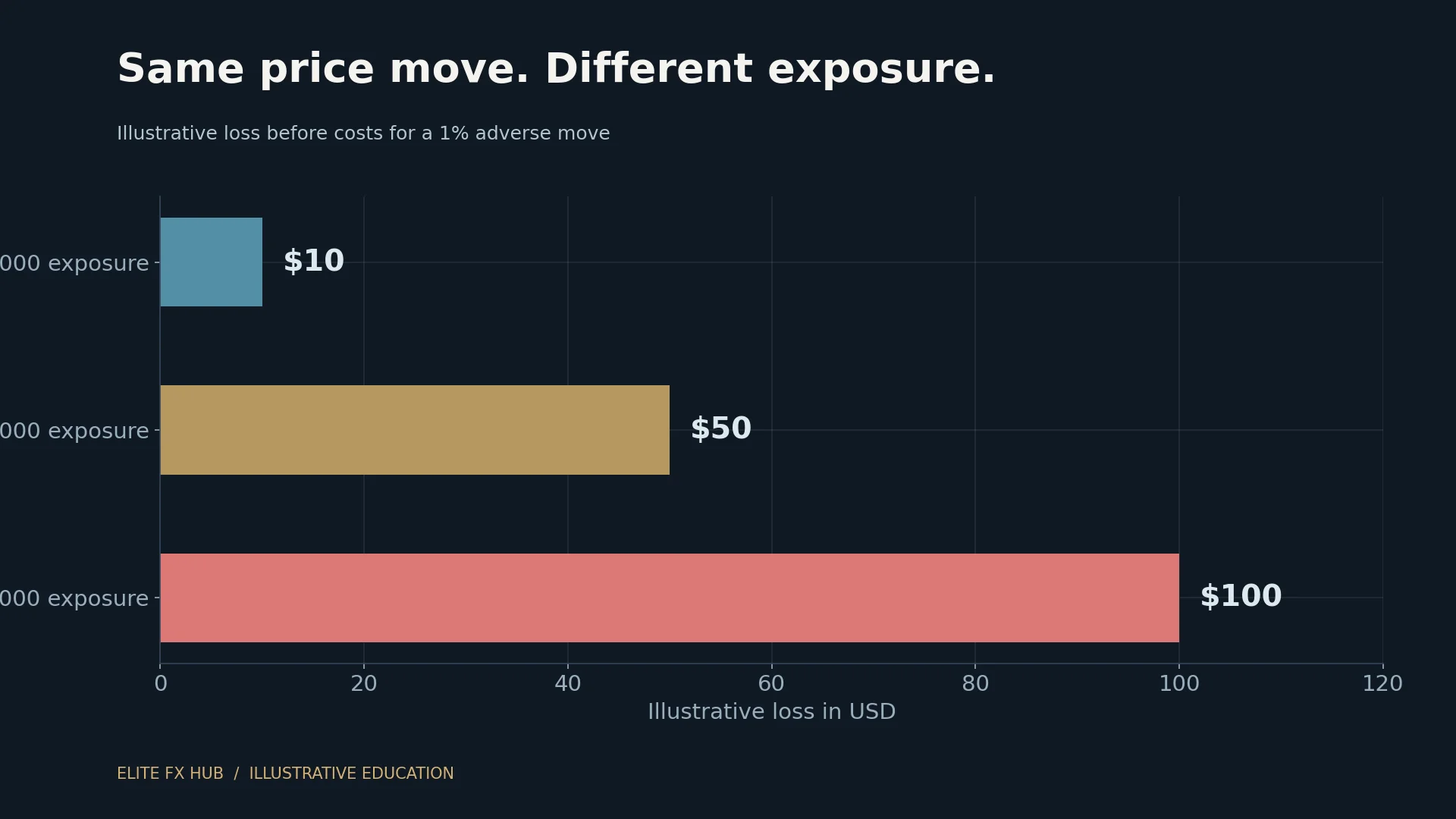
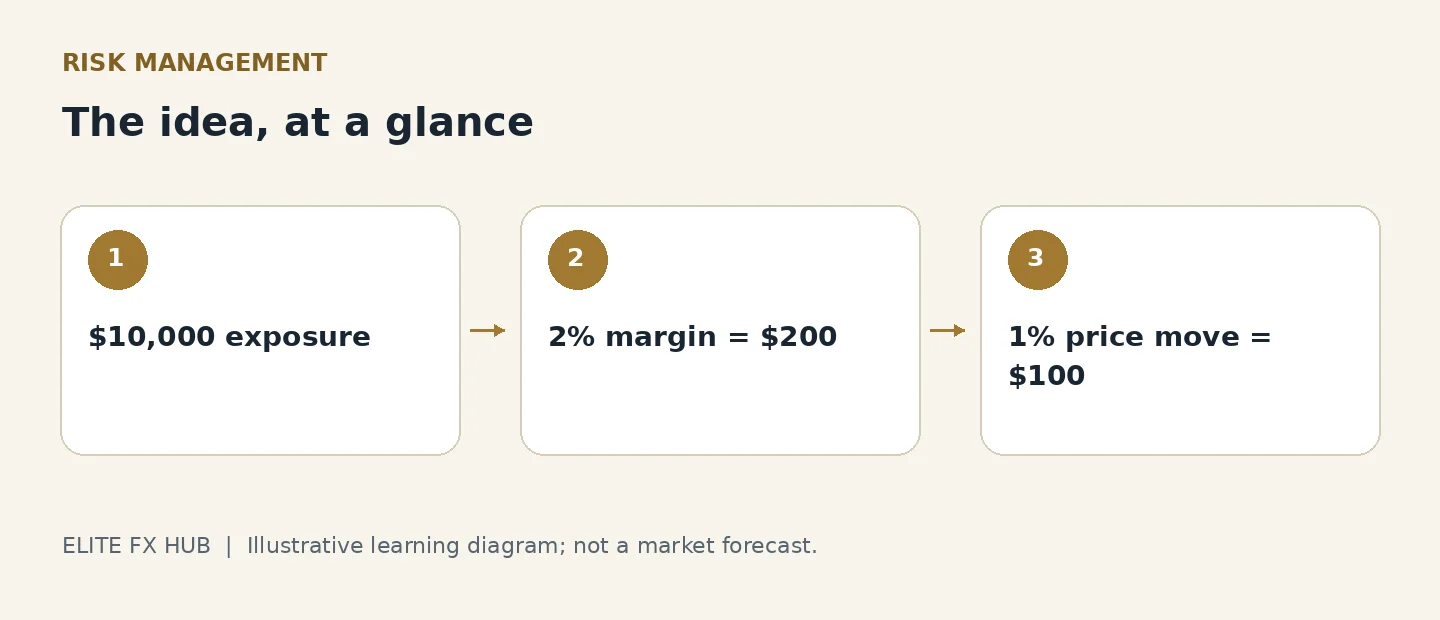
Consider a hypothetical position with 10,000 dollars of exposure and a two-percent initial margin requirement. The initial margin calculation is 200 dollars. A one-percent adverse price move corresponds to roughly 100 dollars of loss in this simplified linear example, before costs and currency-conversion effects. That is half the initial margin amount, even though the market moved only one percent.
Separate three numbers
Keep exposure, required margin and planned trade risk in separate fields. Exposure describes the position's scale. Required margin describes collateral under the provider's rules. Planned risk is your estimate of loss under a chosen exit scenario. None of these numbers is interchangeable, and planned risk can be exceeded when execution differs from the assumption.
A platform can close positions
Read the provider's margin and close-out policy before opening a leveraged position. Do not assume you will receive a warning with enough time to transfer funds. Avoid treating an available-margin figure as a target to use up. Other open positions and changes in market conditions can affect the account at the same time.
Build a stress worksheet
For a demo position, write down the effect of adverse moves of 0.5 percent, one percent and two percent. Use the same exposure in every row. Add a separate note for costs and for the possibility that an exit executes beyond the intended level. The exercise is about understanding sensitivity, not selecting a safe leverage ratio.
Ask the right question
Instead of asking only how large a trade the platform permits, ask what a plausible adverse movement would do to the account. If you cannot explain the answer in money terms, pause the order and resolve the calculation. A small entry deposit does not make a complex product simple or suitable.
Sources and further reading
CFTC: retail forex risks and fraud awareness
Educational material, not a recommendation to trade. Examples are hypothetical. Leveraged products can produce substantial losses. Source links provide context and do not imply an endorsement of ELITE FX HUB.